
Why Construction Productivity Has Not Improved in 50 Years and What the Data Says
Construction productivity has barely moved in five decades. Not because the industry is too complex to measure but because the data that matters most is never captured properly, by the right people, at the right moment.
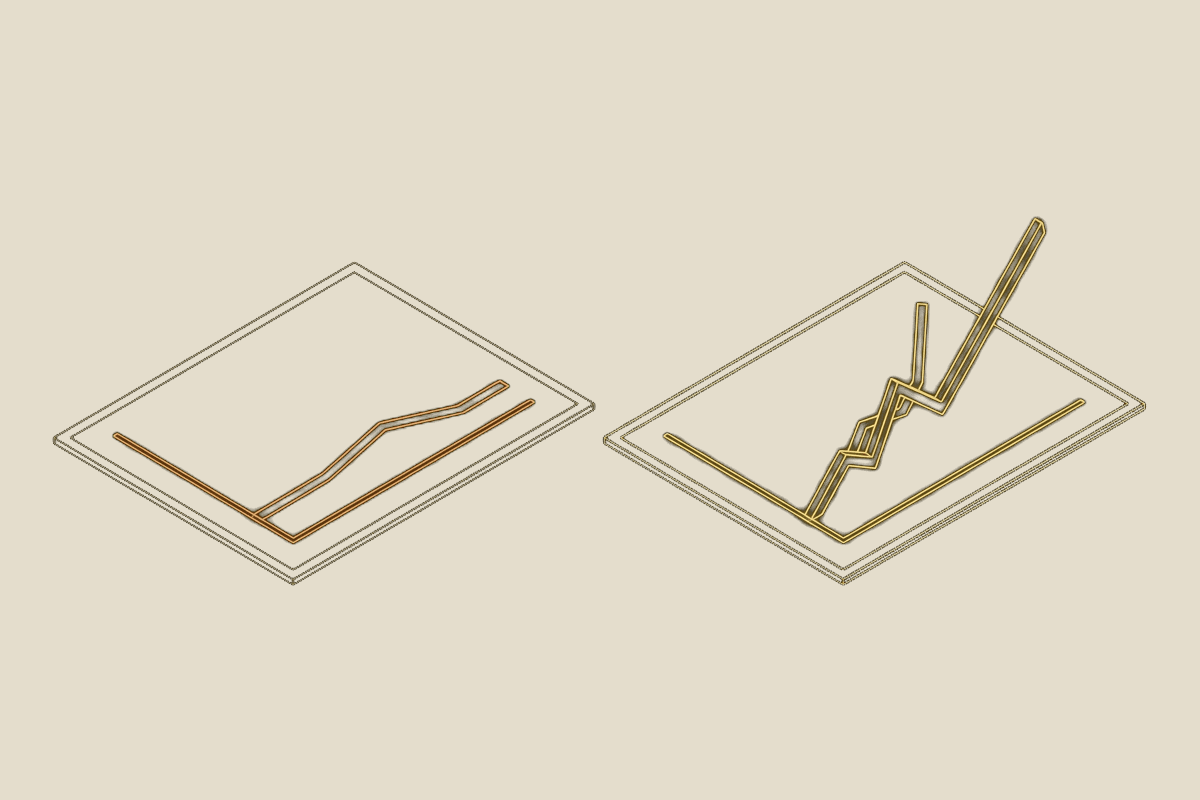
There is a statistic that gets quoted regularly in construction circles, usually with a mixture of resignation and dark humour. While manufacturing productivity has roughly doubled over the last five decades, construction productivity has remained almost completely flat. In some measures, it has gone backwards.
For an industry that moves billions of dollars of materials, coordinates hundreds of trades and manages some of the most complex logistical operations imaginable, this should be alarming. Instead, it tends to be accepted as an immutable fact of life. Construction is different, the argument goes. Too many variables. Too much uncertainty. Too human.
The team at SiteVector has spent time on both sides of the construction fence. Years coordinating equipment deliveries to active commercial sites, pressing for programme information, managing backorder pipelines worth tens of millions and watching the communication gap between supplier and site cause problems that should never have existed. The diagnosis from that vantage point is straightforward. The productivity problem in construction is not primarily a complexity problem. It is a data problem. And more specifically, it is a data capture problem.
What Happens at the Gate
Coordinating hundreds of deliveries every week to active construction sites produces a very clear picture of the information gap. Sites delay with little or no warning. Drivers arrive at gates to find access restricted, trades not ready or the programme has shifted since the last conversation. Requests for rough schedule windows, not precise dates, just approximate guidance, are frequently met with silence or reluctance. Not because people are being obstructive. Because the information genuinely does not exist in any accessible form.
The problem is not unique to the supplier side. It affects everyone connected to a project. The project manager trying to understand programme health without being on site every day. The contract administrator needing a contemporaneous record when a variation dispute arises three months later. The construction manager looking across a portfolio of active projects and trying to compare performance between them.
In each case, the information that would answer the question was generated on site. It just was not captured in a way that makes it retrievable.
The Manufacturing Comparison
Lean Six Sigma methodology is built on a simple premise. Every improvement must be grounded in measurement. Every process change must be tested against real numbers. Waste is identified, quantified and eliminated because it has been observed and recorded, not because someone remembered it happening.
Construction sites face far more variables than a factory floor. Weather, subcontractor performance, design changes, material delays, access restrictions. The response to that complexity, however, has not been to measure it more carefully. It has largely been to accept it as unmeasurable.
The result is that two of the most common tools on a construction site for recording daily events remain the group chat message and the paper diary. Both are fragmented, personal, unstructured and almost entirely useless as a data source the moment the project ends.
The Standardisation Problem
Even when construction data is captured, it is frequently captured in a way that makes analysis almost impossible.
Ask four different site managers to describe the same delay event and four different descriptions will come back. The same subcontractor failing to appear on site might be recorded as "trade didn't show", "no crew on site", "delayed" or simply a note in a diary that nobody else will ever read. These describe the same event. In any downstream analysis, whether for a variation claim, a lessons-learned review or a cross-project performance comparison, they are invisible to each other.
This is not a technology problem. It is a standardisation problem. Without agreed classifications, agreed language and agreed structure at the point of capture, the data that exists cannot be aggregated, compared or learned from. Open text fields feel flexible. In practice they produce noise.
Where the Information Actually Lives
Most enterprise construction software is designed from the top down. It gives directors dashboards and gives project managers reporting tools. It assumes that information flows upward from site through layers of administration into a system that then produces outputs.
The information does not originate at the top. It originates at the gate at 7am when the first truck arrives. It originates with the site manager at 4pm when the hydraulics crew has not finished and the formwork trade cannot start tomorrow. It originates in the real, specific, timestamped events that happen on a physical site every working day.
If the capture tool is not designed for the person who holds that information, if it requires ten minutes of administration rather than ten seconds of structured logging, it will not be used consistently. Inconsistent data is worse than no data, because it creates the illusion of records without providing their value.
A Different Starting Point
The premise behind SiteVector is straightforward. From the moment a gatekeeper logs an arrival or a site manager records a task outcome, the platform starts building a daily record. By end of day, most of the work is already done. The record exists because it was captured in real time by the people who were there, not reconstructed from memory the following morning.
The by-product of those standardised micro-captures, delivery class, RFV reason, turnaround time, task outcome, day number against estimate, is a complete project picture. Across multiple projects it becomes a benchmark. Across the industry it becomes something that has not existed before: a structured, comparable dataset of what actually happens on construction sites, built from the ground up rather than from the boardroom down.
A 50-year productivity problem does not need another dashboard or another reporting layer. It needs a different starting point. One that begins at the gate, at 7am, where the work actually happens.
Explore SiteVector
See how Flow, Commit and Vector capture site data in real time.