
BIM Gave Construction A Shared Language, Just Not For The Day-To-Day
BIM got an industry to agree what things are called. Nothing equivalent was ever agreed for the site diary or the daily record, which is why one job writes rain and the next writes wet weather and neither can be counted.
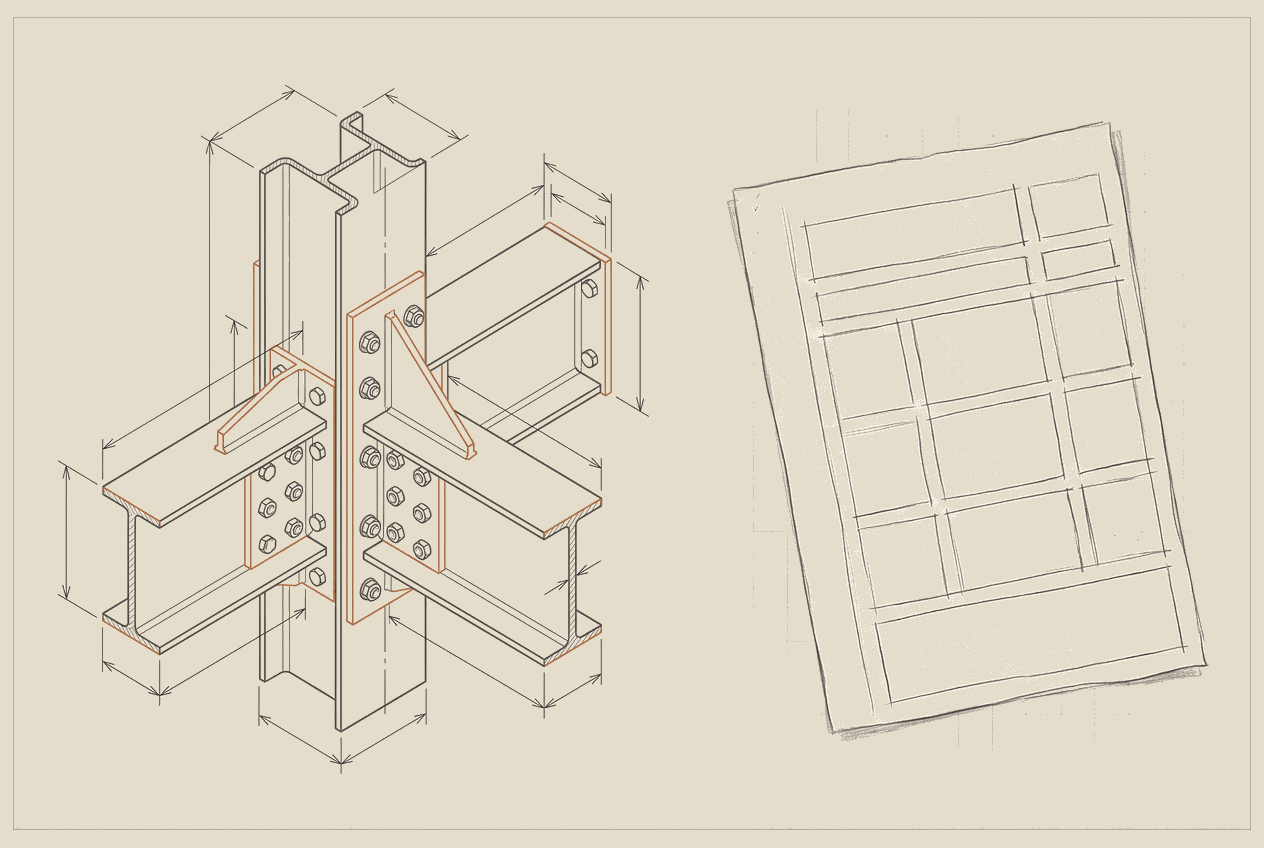
What BIM achieved was getting an industry of separate companies on separate contracts to agree what things are called and where they live. Everyone knows which version they're looking at, so the ambiguity that used to eat whole meetings has gone.
That agreement was the hard part. Construction is fragmented, the parties change on every job and nobody has authority over anybody else's systems, yet the industry still settled on a common structure and a common language for the thing being built. The common data environment is where that discipline lives, since one place with agreed naming turns a pile of files into something everybody can rely on.
It works because it took the guessing out. Two parties looking at the same element see the same element, so when something changes there's one version carrying the change instead of four people each holding a slightly different truth.
Where that discipline reaches
BIM runs from early planning through construction and into operation, with the model getting more precise the whole way along. Coordination happens before anyone is standing in anybody else's way, so clashes get sorted on a screen instead of at eight in the morning with two trades and a foreman staring up at the same ceiling void. Handover carries structured information in place of a shelf of folders nobody opens until something goes wrong.
The same idea sits underneath all of it. If everybody describes things the same way then the descriptions can be trusted and compared. The industry paid real money to get there and it has held up.
The record of the day never got the same treatment
The model is coordinated to millimetres while the record of what happened on Tuesday is a sentence somebody typed from memory after the site closed.
One site manager writes rain and the next writes wet weather, a third writes weather delay half a day and a fourth says access was restricted since the yard had turned to mud, which describes the afternoon better than any of them and lands in a different category altogether. All four are honest accounts of the same conditions and no two of them can be counted together.
Multiply that across a portfolio and the operational picture stops being measurable. Nobody can say how many days went to weather last quarter, since the days were written up in four vocabularies by four competent people who were never given a shared one. The same goes for late materials, for design information arriving after the trade did, for access and for rework, which between them decide whether a job makes money and get written down in whatever words came to mind at the time.
This isn't an oversight by anyone in particular. BIM was scoped around the asset and it did that job thoroughly, while the daily record sat outside that scope from the start and nothing came along afterwards to do for the day what the common data environment did for the model.
Why the day-to-day needs a narrower answer
The obvious move is to extend the model so the daily record becomes one more thing the big system handles, though there are good reasons not to.
Sites differ from each other enormously. A commercial fitout in a city centre, a civil job on a highway and a residential build in a growth corridor share very little in daily rhythm, trade sequencing, delivery constraints or the reasons work stops, with one contractor running two jobs in the same city finding the detail varies between them. A system covering the entire lifecycle across all of that ends up general, which is the one thing the record of a single day can't be, since its whole value sits in the specifics of what stopped and why.
What the day-to-day needs is a narrow agreement covering the handful of things that happen every day on every site anywhere. Work was committed and it either happened or it didn't, materials were due and they either turned up or they didn't, then something caused the difference. That short list holds whether the job is a hospital or a bridge, which is what makes a shared language for it achievable.
What that agreement would have to include
The same four things the common data environment settled for the model, applied to the day.
The event gets recorded when it happens by the person who was standing there, not reconstructed at five o'clock by somebody who has since dealt with nine other problems. The reason comes off a set list so wet weather is wet weather every time and not rain on one job and weather delay on the next. That same list gets used on the following project, which turns the record into something you can compare across a portfolio instead of a diary that only makes sense to whoever wrote it. The day then gets closed so what was recorded stays recorded, the way a model revision is a revision and not a suggestion.
None of that is technically difficult and all of it is an agreement instead of a product, which is probably why it keeps not happening. Agreements need somebody to insist on them and there's no clash detection for a site diary, no report flagging the fourth different phrase for the same afternoon.
The unfinished half
BIM proved that construction can standardise a language across parties who have every reason not to bother with one, then proved that everything built on top of that language gets better. The industry did the difficult version already on the asset itself and left the easier version undone on the day.
The building is described in a language everyone shares. The days that built it are described in whatever words came to hand.
Explore SiteVector
See how Flow, Commit and Vector capture site data in real time.